Urap Latoh
Fresh latoh sea grape, never cooked, tossed with spiced grated coconut and sambal, served with rice, fried tempeh, and salted fish.
- Origin
- Rembang (coastal)
- Category
- Dish
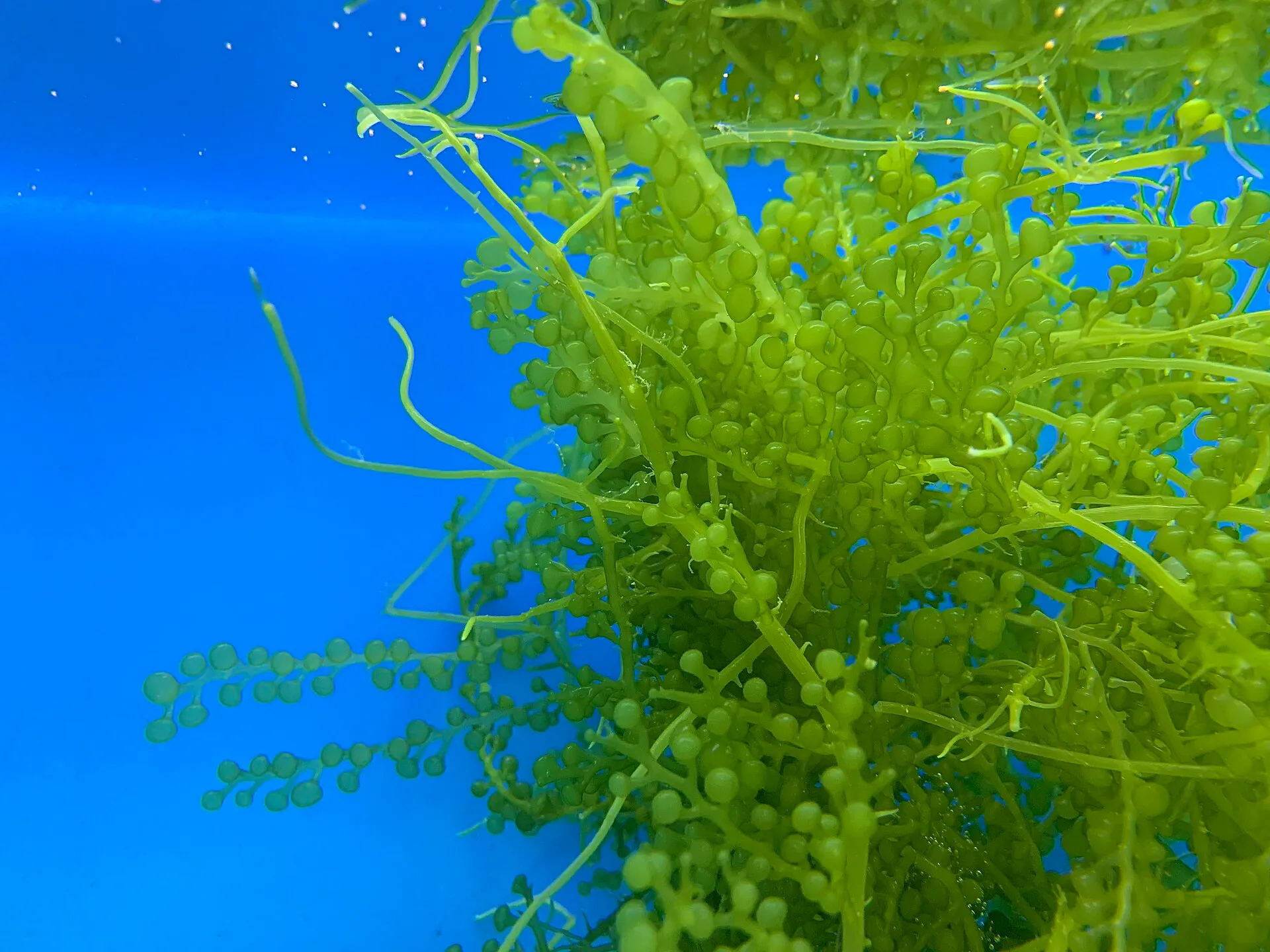
Urap latoh is a coastal dish whose main ingredient rarely appears on tables elsewhere. Latoh is a kind of sea grape, a green seaweed that grows on shallow rocks. It is small, grape-like, and crisp.
An ingredient that is never cooked
What sets urap latoh apart from most vegetable dishes is its method: the latoh is not cooked. The seaweed is simply washed clean, then tossed straight away with spiced grated coconut and sambal. There is no boiling or frying, so its crisp texture stays intact.
The natural salty, savoury taste of the latoh is the point of the dish. The spiced coconut, usually prepared with shallot, chilli, and a little palm sugar, rounds out that sea flavour without covering it.
Because it is never cooked, the latoh must be truly fresh. The seaweed changes texture quickly if kept too long, so urap latoh is best made and eaten on the same day. The coconut should be freshly grated too, so its aroma stays sharp.
How it is eaten
Urap latoh is commonly eaten with white rice, fried tempeh, and salted fish. The combination brings balance: carbohydrate, protein, and the freshness of the seaweed. Because latoh is at its best just after harvest, the dish is most enjoyable on the same day.
Latoh only grows in shallow rocky water. That is why urap latoh is a dish tied firmly to one place, rather than a recipe that travels.
A simple gift from the sea
For coastal families in Rembang, latoh is an everyday catch that is cheap and easy to come by. Urap latoh shows how the coastal kitchen works with whatever is close at hand, using few spices and little processing. It is easiest to find at markets near the shore and at traditional stalls along the coast, especially in the season when latoh is plentiful in the shallow water.