Sate Srepeh
Grilled free-range chicken satay in a thin, red coconut-milk peanut sauce, served with lontong tahu on a teak leaf.
- Origin
- Rembang City
- Category
- Dish
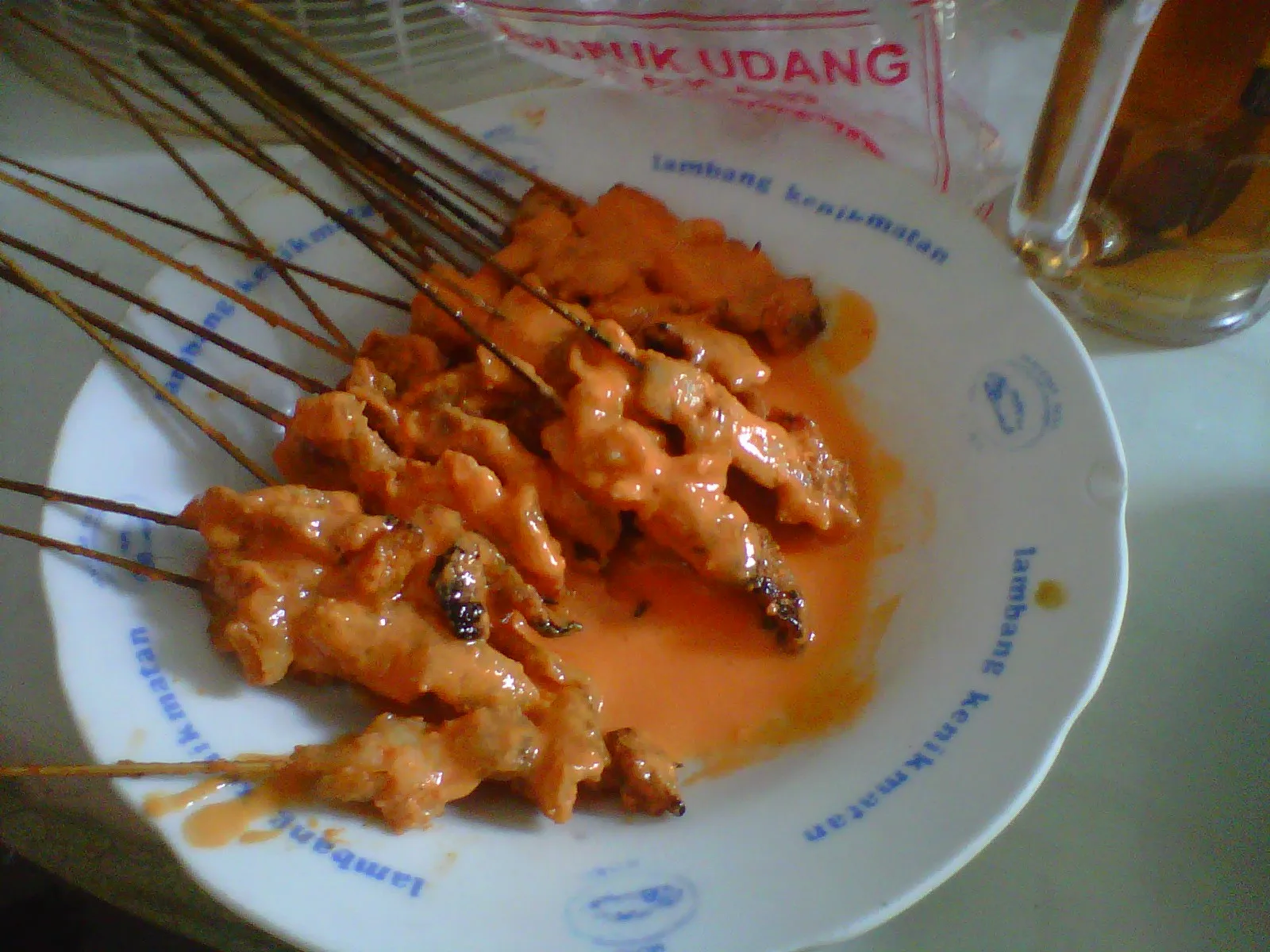
Sate srepeh is the dish most often named when people ask what Rembang is known for. At a glance it looks like ordinary chicken satay, but the moment it reaches the table it sets itself apart: not a thick brown peanut sauce, but a thin, reddish, coconut-milk sauce.
The sauce is the difference
The fundamental difference lies in the sauce. Ordinary chicken satay uses a thick peanut sambal with shallots and chilli. Sate srepeh uses a coconut-milk base cooked with red chilli, salt, and palm sugar, producing a reddish sauce with a thinner texture. The flavour is spicy, savoury, and faintly sweet, not the sweetness of peanut, but the sweetness of palm sugar that lingers on the tongue.
The meat is free-range chicken (ayam kampung), sliced thin and grilled until fragrant, with edges lightly crisped. A single portion usually holds ten skewers: five of meat and five of offal.
How it is served
The serving style is distinctive too. The skewers are laid over lontong tahu, compressed rice cake with fried tofu, on a bed of teak leaf, then doused with vegetable stew broth and the coconut-peanut sauce. Fried tofu and red sambal are added to taste. The teak leaf lends a natural aroma a plain plate cannot.
It is commonly eaten from breakfast through lunch, with prawn crackers (peyek udang) and fried tempeh alongside.
Because coconut milk does not keep and few vendors make it, sate srepeh is best sought in the morning. A handful of long-standing stalls in Rembang City have become fixed destinations.
Where to find it
Vendors are scarce, even in Rembang itself. One well-known stall sits near Jalan Pahlawan, not far from the district hospital. If you happen to pass along the north-coast highway and see a warung with grilling smoke in the morning, it is likely sate srepeh.