Mangut Manyung
Smoked sea catfish simmered in spiced coconut milk, smoky and savoury with a gentle heat.
- Origin
- Rembang (coastal)
- Category
- Dish
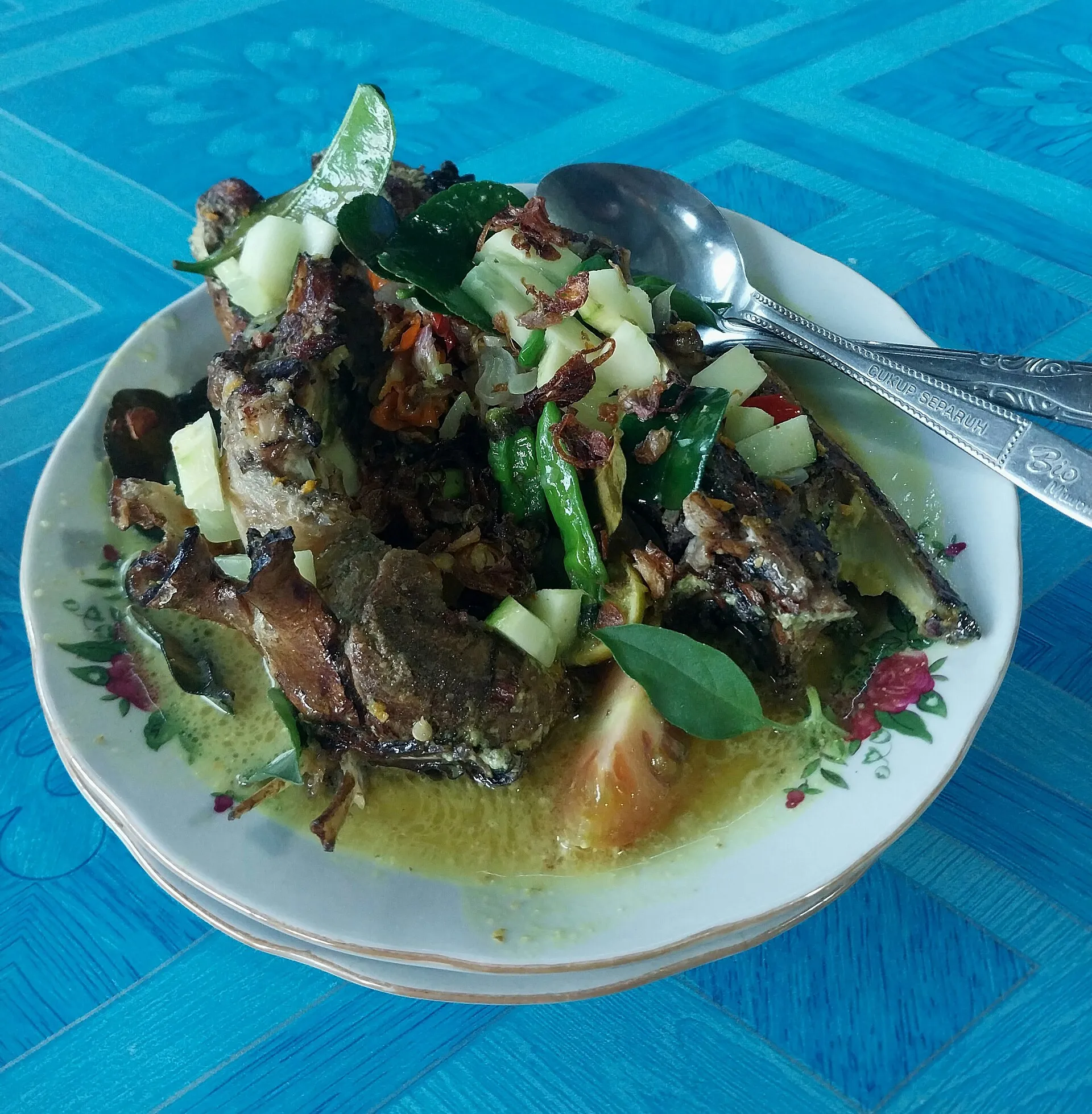
Mangut manyung is a dish born in the kitchens of the north-coast fishing communities. The manyung, a kind of sea catfish, is smoked first, then simmered in spiced coconut milk. The result is smoky, savoury, and gently spicy.
From smoke to coconut milk
Smoking is an old way of preserving fish along the coast. Once smoked, manyung carries a deeper aroma and flavour than fresh fish. When that smoked fish is simmered in spiced coconut milk, two layers of flavour meet: the density of smoke and the softness of coconut milk.
The spices usually include shallot, chilli, aromatic ginger (kencur), and bay leaf, along with a few others depending on each kitchen. The broth is slightly brown, not as thick as a curry, but rich enough to cling to rice.
Manyung has fairly thick, slightly oily flesh, which makes it well suited to smoking and then simmering in liquid. Once smoked, its texture firms up, and as it cooks in coconut milk it takes on the spices without falling apart. That is why smoked manyung is more often chosen than fresh for this dish.
How it is eaten
Mangut manyung is commonly eaten with hot white rice. Because the flavour is strong, it pairs well with a simple vegetable dish or fresh raw vegetables. At coastal stalls it is often a mainstay in the morning, when the day’s catch has just been prepared.
For coastal families, mangut is not a luxury. It is an everyday side dish that turns simple smoked fish into a filling, brothy meal.
Part of the Pantura kitchen
Along the north-coast highway, mangut is known in many versions, and each area has its own character. The Rembang version puts smoked manyung at the centre. Some stalls add tofu or tempeh to the broth to make the dish more filling. It is easiest to find at stalls near the shore and the fish market, where the tradition of smoking fish is still alive.