Sea Offerings and the Coastal Traditions
Rembang's coastal people give thanks through sea offerings, floating rituals, and the washing of a sacred gong. The rites are old; their meaning keeps being reread.
- Category
- Tradition
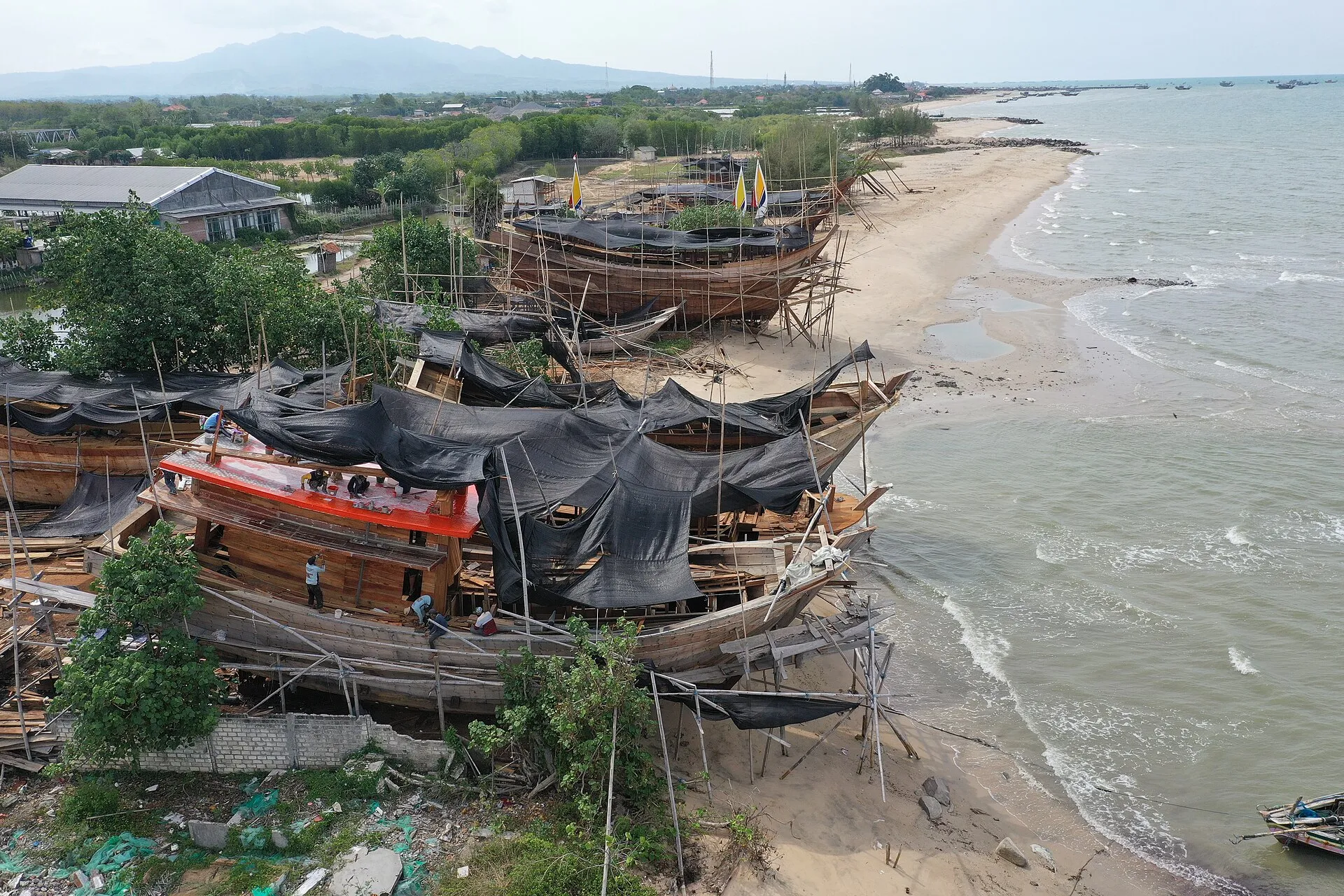
For the coastal people of Rembang, the sea is more than a place to earn a living. It is a neighbour owed respect, and that respect is expressed in ceremonies handed down through generations. The largest is Sedekah Laut, known in some places as Lomban. Its essence is simple: thanks for the sea’s yield, and a plea to be kept from harm.
The sequence of a sea offering
Sedekah Laut is held every year in the month of Sura, in stages. It opens with Nyekar, a visit to ancestral graves. Then comes Tirakatan, a night of shared prayer. The peak is Larung, when offerings are set adrift on the sea. After that comes Ruwatan, a cleansing from what is thought to bring misfortune. The prayers are led by a modin, who recites the Rajah Kala Cakra mantra.
At Laut Bonang, in Lasem district, the rite is a crowded annual fixture. In Sarang district the celebration runs up to four days and is said to cost around Rp 50 million, since it involves many boats, offerings, and performances.
Earth offerings and village cleansing
In farming villages, gratitude takes the form of Sedekah Bumi or Bersih Desa. Residents bring in the harvest, hold a shared prayer, and clean the village. The shape differs from the sea tradition, but the logic is the same: an admission that fortune comes from beyond human effort alone.
The sea and the fields teach the same lesson. Fortune is not entirely ours, and so it deserves to be shared in thanks.
Washing the Bende Becak
One of the most distinctive traditions is Penjamasan Bende Becak, the ritual washing of Sunan Bonang’s sacred gong. It is held in the month of Selo in Desa Bonang. The gong is believed to be a relic of Sunan Bonang, and its washing is a moment the whole village awaits.
Hauls, processions, and festivals
Coastal tradition also lives on through the Haul Mbah Sambu, an annual commemoration that draws many pilgrims. There is also the Kirab Budaya Mak Co Tian Siang Sheng Bo, a cultural procession honouring a Chinese figure. In newer form come the Lasem Batik Carnival, the Festival Lasem, and the Festival Gang Boen Toe, which repackage tradition as public celebration.
What is striking is how these rites keep being reread. Some residents understand them as worship, some as cultural preservation, and some as a mark of village identity. All three readings coexist, none cancelling the others.