Temples, a Mosque, and a Vihara in One Town
In Lasem a 16th-century Chinese temple, a mosque, and a Buddhist vihara stand close together. The town's architecture is living proof that six faiths grow side by side.
- Category
- Architecture
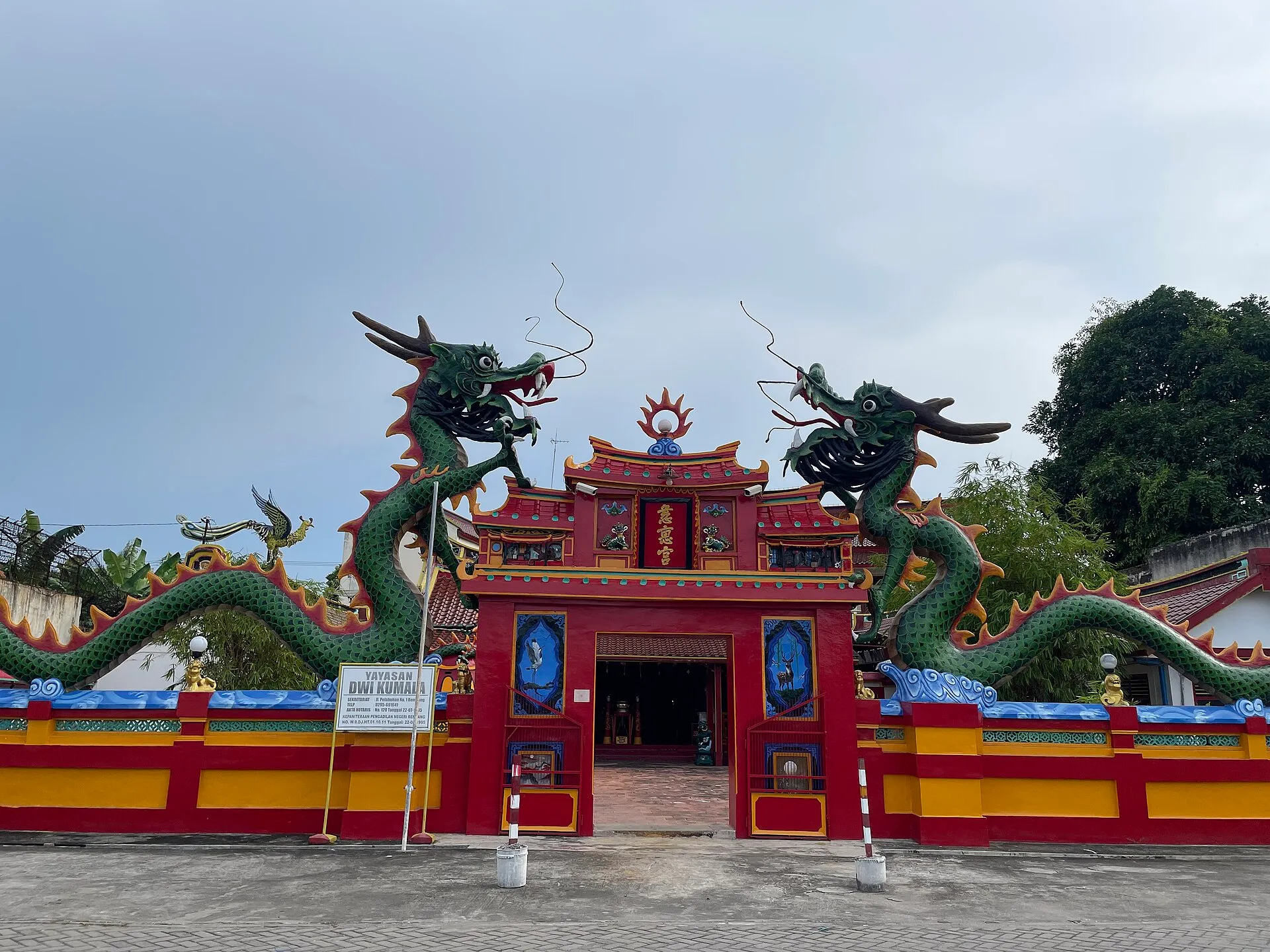
Lasem is rarely described through its buildings, yet that is where its story is clearest. Within a few kilometres stand a Chinese temple, a mosque, and a Buddhist vihara, all still in use. This is not a museum of tolerance put on display; it is a town where people genuinely worship side by side every day.
Temples on the river
Klenteng Cu An Kiong has stood since the 16th century in the Chinese quarter of Soditan. It is dedicated to Mazu, goddess of the sea, a fitting figure for a port town that lived by the boat. West of the Lasem river stands Klenteng Gie Yong Bio, and north of the Kemendung river is Klenteng Po An Bio. Together they mark how old the Chinese community here is.
A vihara on the hill
Temples are not the only thing that grew here. On Telueng hill, in Sendangcoyo, stands Vihara Ratanavana Arama, a Buddhist house of worship, quiet and set away from the market’s noise. Its presence completes the picture: Lasem is not a town of two faiths but of many traditions.
A mosque and a much-visited grave
The Islamic side of Lasem is represented by Masjid Jami’ Lasem, where Mbah Sambu, or Sayyid Abdurrahman Basyaiban, who died in 1671, is buried. His grave draws a steady stream of pilgrims. In the Bonang area lie Masjid Bonang and the Pasujudan Sunan Bonang complex, tied to one of the most important spreaders of Islam in Java. Nearby is the Makam Putri Campa, the grave of a Champa princess linked to the early arrival of Islam and of batik in this town.
Six faiths live in Lasem without serious friction. What holds them together is not a grand agreement, but the daily habit of knowing one another.
Chinatown and Lawang Ombo
Lasem’s history also reads in the shophouses of the old Chinese quarter, with their narrow fronts and deep corridors. One building often mentioned is the former opium house Lawang Ombo, a witness to the years when trade was the town’s lifeline. These buildings explain why Lasem’s architecture feels different from other towns on Java’s north coast.